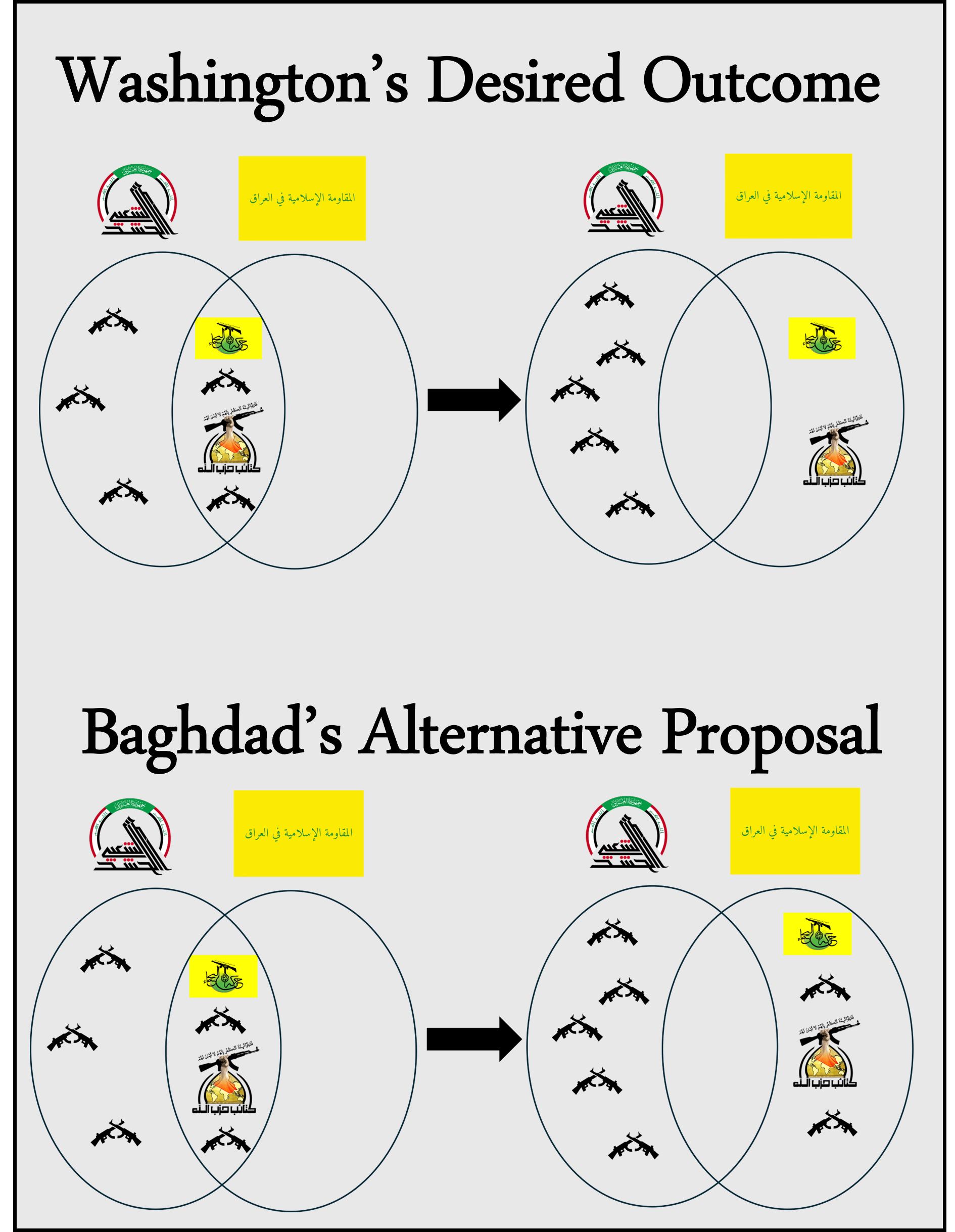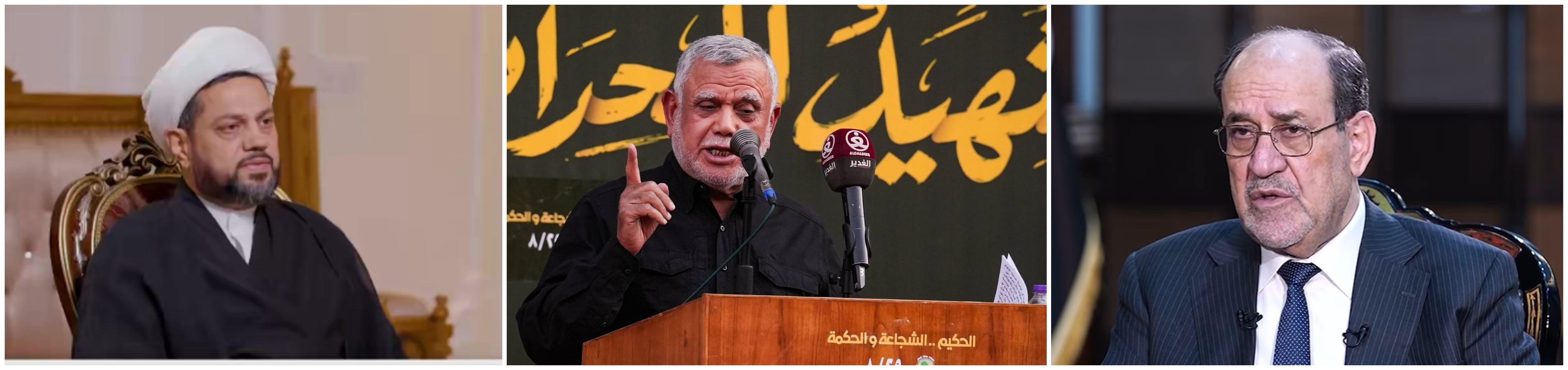
Prominent leaderships figures of Shia political parties and militia movements appear to be converging on a consensus regarding their approach to US’s ultimatum for militia disarmament by September 30th. As the deadline moves closer, political and militia leadership seek to shift the focus from outright disarmament of Iran-backed militias, to a focus on distancing Iran-backed militias from the state institution of the Popular Mobilisation Forces (PMF).
Diversion and rebranding is unlikely to satisfy US demands, raising near-term sanctions risk on Iraqi public and private individuals and institutions.
Who said what
Nouri Al Maliki
Al Maliki heads the ‘State of Law Coalition’, the second largest parliamentary bloc and largest element of the broader ‘Coordination Framework’ of Shia political blocs and parties.
Al Maliki gave an interview to Al Sharqiya, released on September 4th, where he stated categorically and repeatedly that the objective with respect to Shia armed factions had shifted from “disarmament” to “regulation”, warning against an approach which would unnecessarily humiliate militias in a way which makes their cooperation less likely.
When asked directly about the issue of Shia militias operating inside the state institution of the PMF, Al Maliki said:
“We do not tolerate the existence of militias in the PMF, this is what we’re here to resolve. The militias are one thing and the PMF is another”
When pressed on where where the militias will go after dissociating from the PMF, Al Maliki responded:
“…They stay, as they have existed before. Some militias have transitioned into politics. Others will stay as militias…but, but, will not be permitted to give orders to [units in] the PMF”.
Hadi Al Ameri
Al Ameri heads the Badr Organisation, the third largest Shia parliamentary bloc (after ‘State of Law Coalition’ and ‘Al Sadiqoun’), and by far the largest parliamentary bloc which still maintains an active armed wing in the form of the ‘Badr Brigades’ militias. The Badr Organisation also notably holds two ministries in Prime Minister Ali Zaidi’s cabinet, in the form of the Transport and Water Resources ministries.
After initially showing some receptivity to disarming the Badr Brigades in statements made in December 2025, Al Ameri changed his tone sharply after joint US-Saudi airstrikes against PMF and Shia militia sites in late July of this year. Al Ameri publicly challenged the framing of US and regional pressure for disarmament in a speech delivered to supporters of the Badr Organisation on August 29th.
Speaking at the memorial ceremony of Ayatollah Muhammad Baqir al-Hakim, Al Ameri stated:
“it is completely impossible that [Ali Ali Zaidi] will choose a confrontation with the Resistance”
and that:
“The issue if disarmament, or more appropriately and correctly, the regulation of arms…is not an external decision, but an exclusively Iraqi one, and we refuse any foreign interreference in this matter”
Ali Al Assadi
Al Saadi sits as the ‘head of the political council’ of the Iran-backed Shia militia Harakat Hizbullah Al Nujaba. Although not represented formally by a parliamentary or political bloc, Al Nujaba form one of two Iran-backed militias most active in kinetic operations against the US and its allies in the region - the second being Kata’ib Hizbullah. Both Al Nujaba and Kata’ib Hizbullah have publicly rejected calls for disarmament and vowed to continue their activities against the US and its allies in various statements released over the past six months.
Al Saadi made public his ongoing meetings with unnamed representatives of the Coordination Framework in a statement released September 4th, in which he reaffirmed the Islamic Resistance’s position of retaining its weapons in exchange for ceasing its involvement in the PMF, and refraining from participation in formal politics. Speaking on behalf of Al Nujaba, Al Saadi echoed statements made by Al Ameri and Al Maliki in the preceding days saying:
…we clarified and stated our position on preserving the existence of the Popular Mobilization Forces (PMF) as a national institution that cannot be interfered with, as well as our position on the Islamic Resistance and the sanctity of its weapons.”
“In light of these discussions, we reaffirmed our approach of not participating in the political process.”
Al Saadi’s statement also claimed that Al Nujaba’s proposals has been positively received and considered by the Coordination Framework.
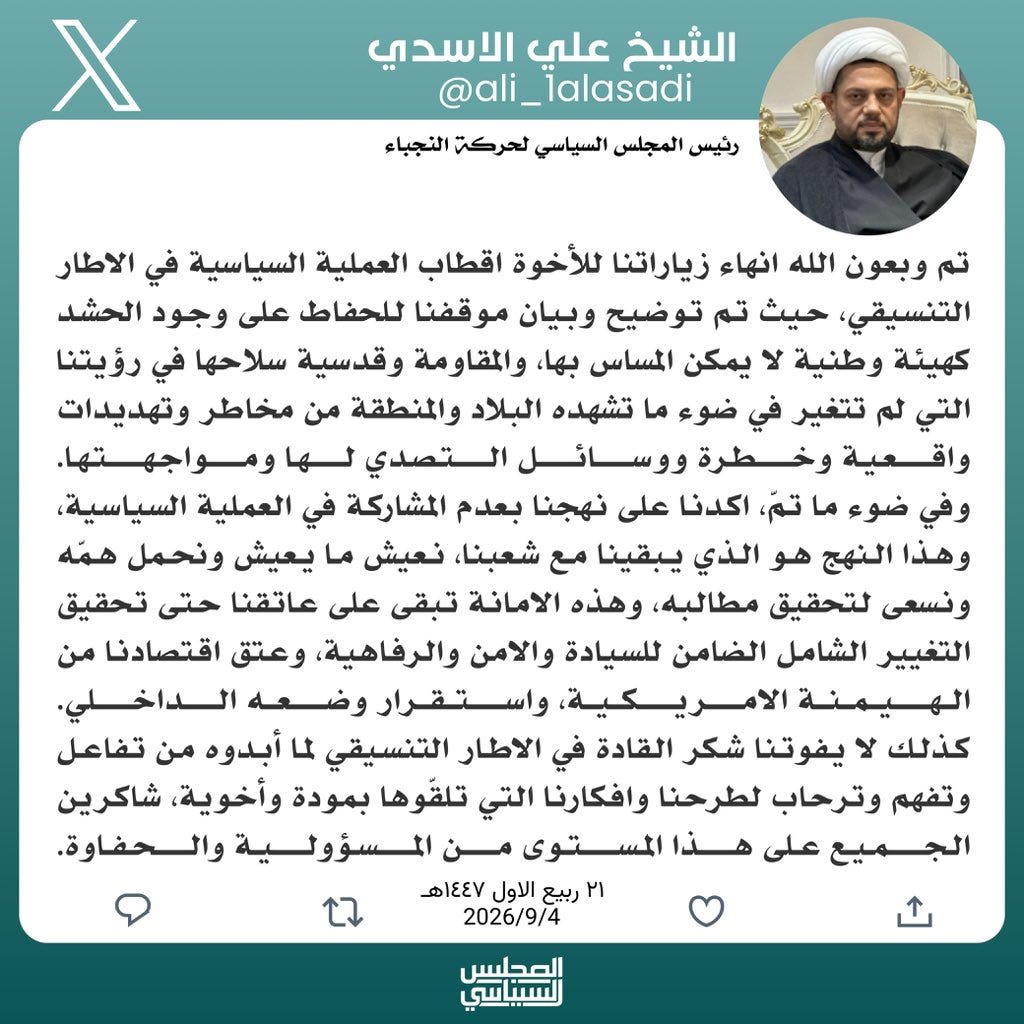
[Full translation]
“With God’s help, we have concluded our visits to the brothers who are leading figures in the political process within the Coordination Framework. During these meetings, we clarified and stated our position on preserving the existence of the Popular Mobilization Forces (PMF) as a national institution that cannot be interfered with, as well as our position on the Islamic Resistance and the sanctity of its weapons. Our position has not changed in light of the real and serious risks and threats facing the country and the region, nor regarding the means of confronting and responding to them. In light of these discussions, we reaffirmed our approach of not participating in the political process. This approach is what keeps us close to our people: we live through what they live through, carry their concerns, and strive to fulfil their demands. This responsibility remains upon us until comprehensive change is achieved—change that guarantees sovereignty, security and prosperity, strengthens our economy against American dominance, and ensures stability in the country’s internal situation. We also would not miss the opportunity to thank the leaders of the Coordination Framework for the engagement, understanding, and warm welcome they showed toward our positions and ideas, which they received with friendliness and brotherly spirit. We thank everyone for this level of responsibility and hospitality.”
Implications
The underlying motivation behind Washington’s demands is the need to neutralise actors within Iraq’s borders who act outside the chain of command of the Commander-in-Chief of the Iraqi Armed Forces. Baghdad’s alternative proposal therefore aims to shift the focus from ‘disarmament’ to a focus on the PMF’s own integrity, and depriving noncompliant Iran-backed militias of the PMF’s institutional cover.
This notably however does not address Washington’s key concern and leaves Harakat Hizbullah Al Nujaba and Kata’ib Hizbullah with their arsenal of weapons, albeit deprived of PMF support. Given that joint US-Saudi strikes in July appear to have pushed the Coordination Framework and Islamic Resistance closer together, Washington is likely to revert back to targeted financial pressure to drive a wedge between these two power centres. This will likely come in the form of sanctions on Iraqi public and private institutions and individuals associated with noncompliant militias operating under the Islamic Resistance umbrella.