

Sanctions
Following several weeks of defiant public statements from leadership figures of Shia political blocs and armed groups, the US Treasury made its opening moves last week against Kata’ib Hizbullah (KH), the Popular Mobilisation Forces (PMF) and several associated companies. In a press release published September 9th, the US Treasury’s ‘Office of Foreign Assets Control’ (OFAC) announced new sanctions which included four Iraqi KH members, a senior official of the PMF, two Iraq-based companies and a third Iraqi-owned UAE-based company:
Individuals
Ali Hasan Farhan Al-Lami - Senior KH Commander
Abbas Jawad Kadhim Al-Tameemi - Senior official of the PMF’s Directorate of Technical Equipment
Hussein Ahmed Hussein Al-Dhuhaibawi - KH Member
Mohamed Ameen Fadhil Ali Al-Shaikhli - KH Member
Karrar Mohammed Qasim Al-Hraishawi - KH Member
Companies
Al-Brouj For General Contracting Company Ltd - PMF procurement contractor
Ain Al-Iraq For Protecting Technology and Audio, Visual, and Communications Solutions Company Ltd - PMF procurement and logistics contractor
Shams & Bahr Trading Company L.L.C. - Hawala money transfer provider based in the UAE moving funds between Iraq and Iran.
The companies’ key principals were also listed in the sanctions package.
Implications
The US Treasury’s choice of sanction targets reflects a pivot of strategy by Washington towards driving a wedge between the Iraqi state institution of the PMF on the one hand, and Iran-backed actors of the ‘Islamic Resistance’ on the other, through financial pressure rather than kinetic action.
OFAC’s sanctions to date have notably not included the PMF itself as an institution, which has so far escape both US sanctions and terror designations since its inception in 2016. The latest round of sanctions similarly targets specifically those actors which Washington deems to be an extension of Iranian influence inside Iraqi institutions and involved in kinetic action against US interests. In this case, Kata’ib Hizbullah, a major pillar of the Iran-backed ‘Islamic Resistance in Iraq’. The Treasury’s choice of the PMF’s ‘Directorate of Technical Equipment’ is similarly tied to it being led by former KH official and designated terrorist Salah Mahdi Hantush al-Maksusi, first sanctioned back in 2012.
If successful, Washington hopes for these measures to turn up pressure on Shia political leadership and officials within the PMF itself, to take a harder line on the disarmament of noncompliant Iran-backed militias, such as KH and Harakat Hizbullah Al Nujaba (HN), rather than continue to pursue a consensus compromise which leaves these groups with their arsenal of weapons. Already struggling to pay salaries due restrictions in the Strait of Hormuz, Iraq’s federal government can hardly afford for these sanctions to spread to other sectors of the economy, forcing a choice between civil unrest and militia disarmament.
Forcing Baghdad’s hand does however come with its own risks. Even if Baghdad decides to take a less compromising position towards noncompliant militias to save its economy, there is no guarantee that a threat of action by Iraq’s federal government will sufficiently coerce Iran-backed militias into disarmament without an outbreak of violence.

Suspected Iraqi militias continue strikes on Saudi energy infrastructure
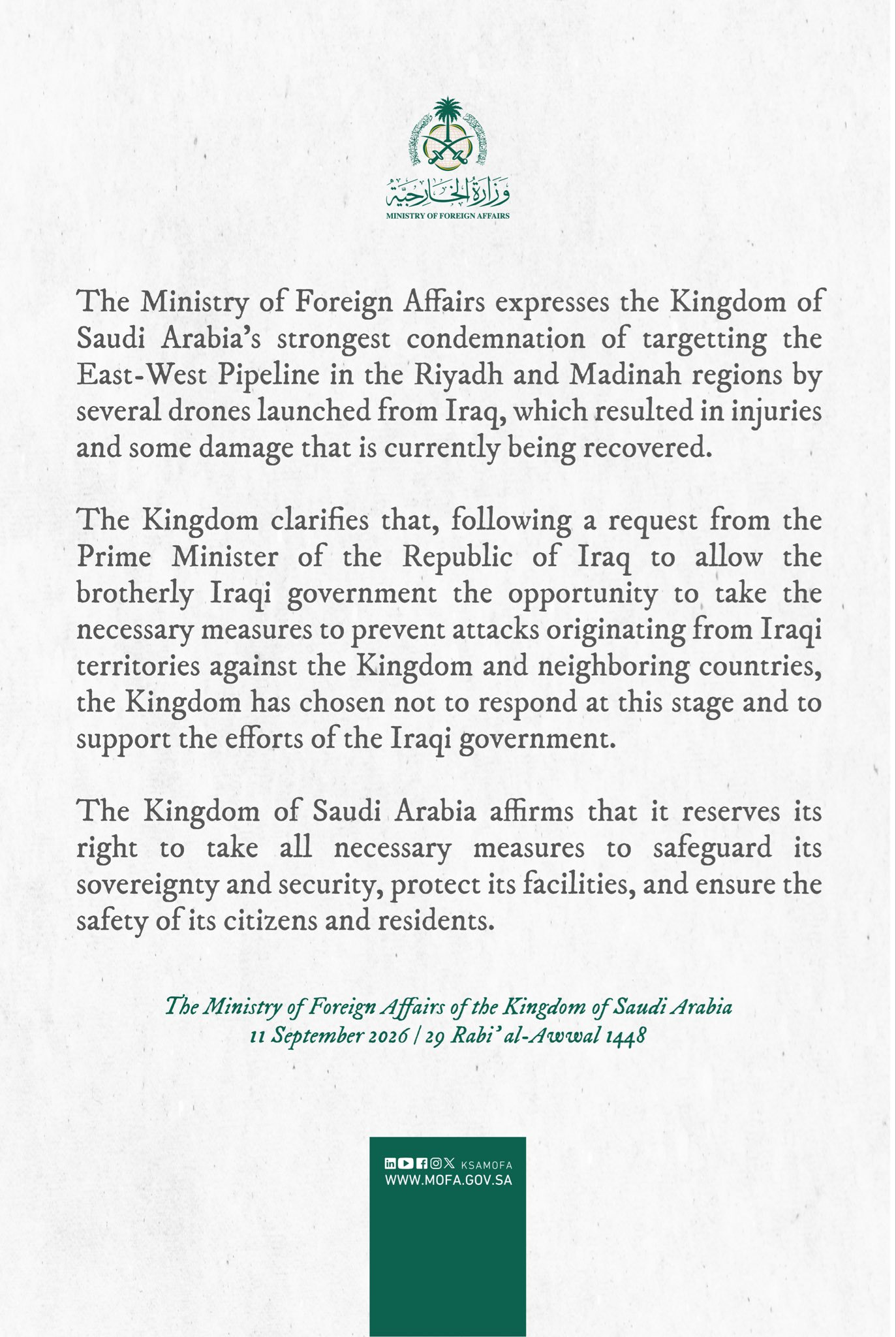
Saudi Arabia’s East-West Pipeline which has acted as a vital workaround since disruption in the Strait of Hormuz, came under attack on September 10th by suspected Iran-backed militia’s operating out of Maysan Province, Iraq. Severe damage inflicted to the pipeline’s pumping stations has since resulted in its closure - which the Saudi Ministry of Energy described as merely a “precautionary” measure. The pipeline however remains offline. This comes after joint US-Saudi air forces struck PMF and Iran-backed militia sites inside Iraq back in July killing and wounding several dozen personnel, itself in retaliation to similar attacks against Saudi energy infrastructure launched from inside Iraqi territory at the time.
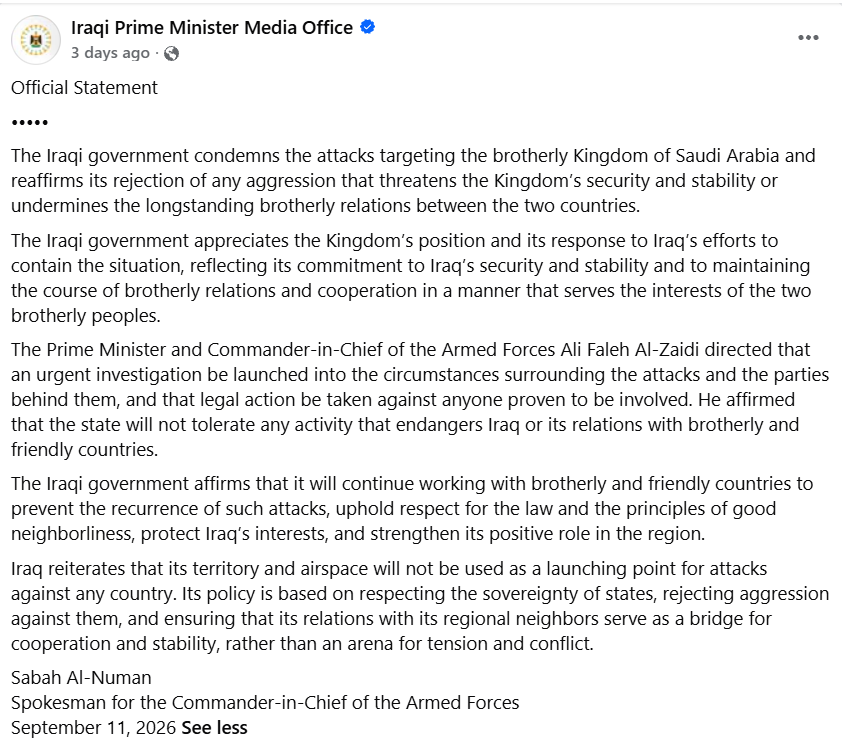
Coordinated statements released by the Media Office of the Iraqi Prime Minister and the Saudi Foreign Ministry on September 11th, expressed that Iraqi Prime Minister Ali Al Zaidi had personally requested Riyadh not to retaliate on this occasion, but rather give Baghdad the opportunity to deal with the issue internally. The Saudi Foreign Ministry expressed that Riyadh had accepted this request and had,
“chosen not to respond at this stage and to support the efforts of the Iraqi government”
while affirming that it,
“reserves its right to take all necessary measures to safeguard its sovereignty and security”
The Media Office of the Iraqi Prime Minister for its part expressed its appreciation towards the Kingdom for its restraint and willingness to entrust Baghdad with investigating the matter and pursuing the perpetrators and individuals involved in the attack.
Iraqi action against attack
Follow-up statements by the Media Office of the Iraqi Prime Minister later in the evening of September 11th, announced the opening of an investigation into the Maysan Province Operations Command, the dismissal of its Police Commander, and transfer of the heads of security agencies for Maysan Province pending the investigation.
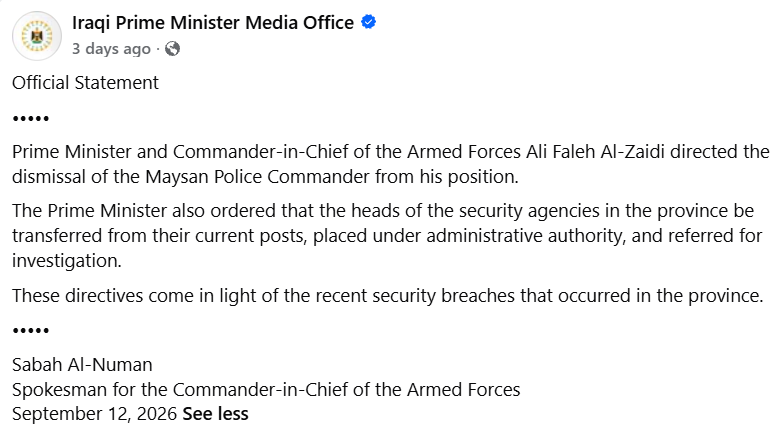
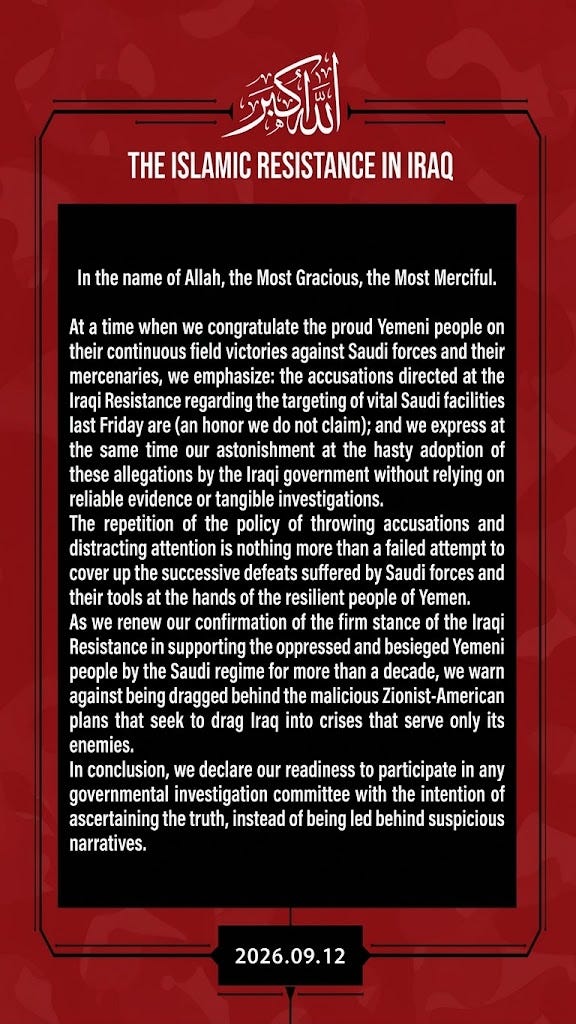
Official statements by the ‘Islamic Resistance’, the broader umbrella of Iran-backed militias, notably denied any involvement in the attacks despite glorifying them. Local media citing Iraqi security officials suggested that the perpetrators were not ‘formally’ part of the Islamic Resistance, and had entered into Iraqi territory from Iran before launching their attacks and escaping back into Iran.
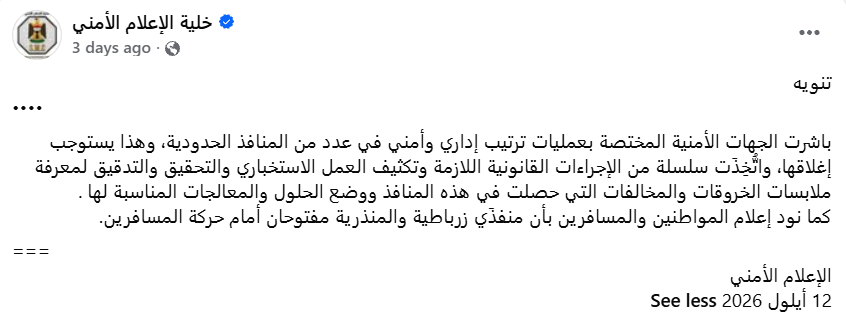
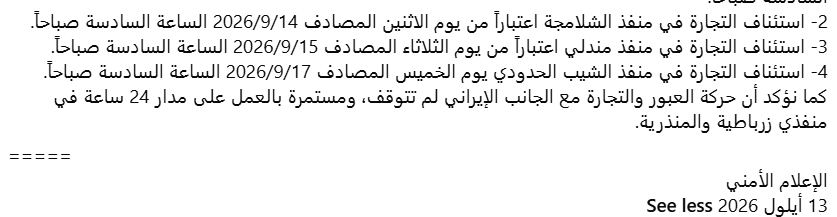
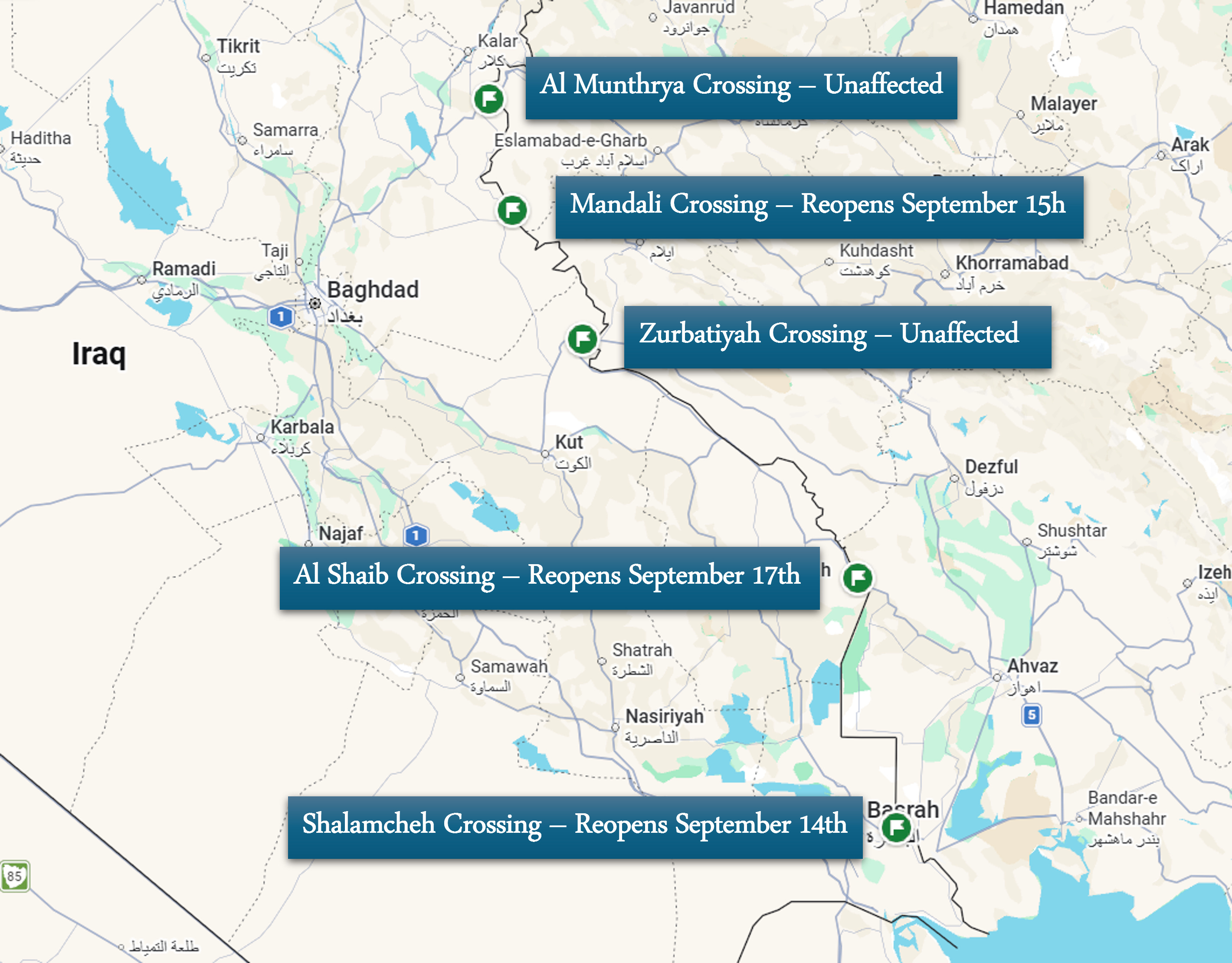
Statements released by the Iraqi government’s ‘Security Media Cell’ also announced the closure of 3 out of 5 of Iraq’s border crossings with Iran pending the enhancement of security protocols due to “breaches and violations that occurred at these crossings”, while also laying out timelines for their reopening.
Implications
Riyadh and Washington’s response to the latest attacks launched from Iraqi territory against Saudi energy infrastructure sit in stark contrast to their decision just over a month ago to launch airstrikes, displaying further signs of a pivot towards a carrot-and-stick strategy in dealing with Baghdad and Iran-sponsored actors.
Although Riyadh and Washington might not find much consolation in Baghdad’s piecemeal attempts to take action against Iran-sponsored attacks launched from Iraqi territory, they increasingly understand the risk of kinetic action pushing Shia political leadership and Iran-backed militias closer together in a zero-sum game. This strategy also signals US-Saudi cautiousness in further undermining Iraqi central government authority, which they would rather draw closer to their position than weaken relative to the Iran-backed militias.
Saudi Arabia and Washington can hardly afford to lose Al Zaidi as a friend in Baghdad in the absence of better options - even if Al Zaidi is far from an ideal friend. The US and its Middle East allies increasingly understand that they will have to engage with, and support, Iraq’s formal security institutions if they are to tackle Iran-backed actors which use Iraq’s territory to threaten its neighbours, rather than acting unilaterally against such actors.